
As children grow and develop, movement patterns, foot positioning, and mobility skills can vary widely. While many differences improve naturally over time, some children benefit from additional support to optimize alignment, movement efficiency, and participation in everyday activities.
When families notice concerns with walking, foot positioning, balance, or gross motor development, they are often introduced to treatment options they may not have heard of before. One intervention that can be highly effective for certain children is serial casting.
Serial casting is a specialized treatment approach designed to gradually improve range of motion, alignment, and movement patterns through a structured process over time.
What is Serial Casting?
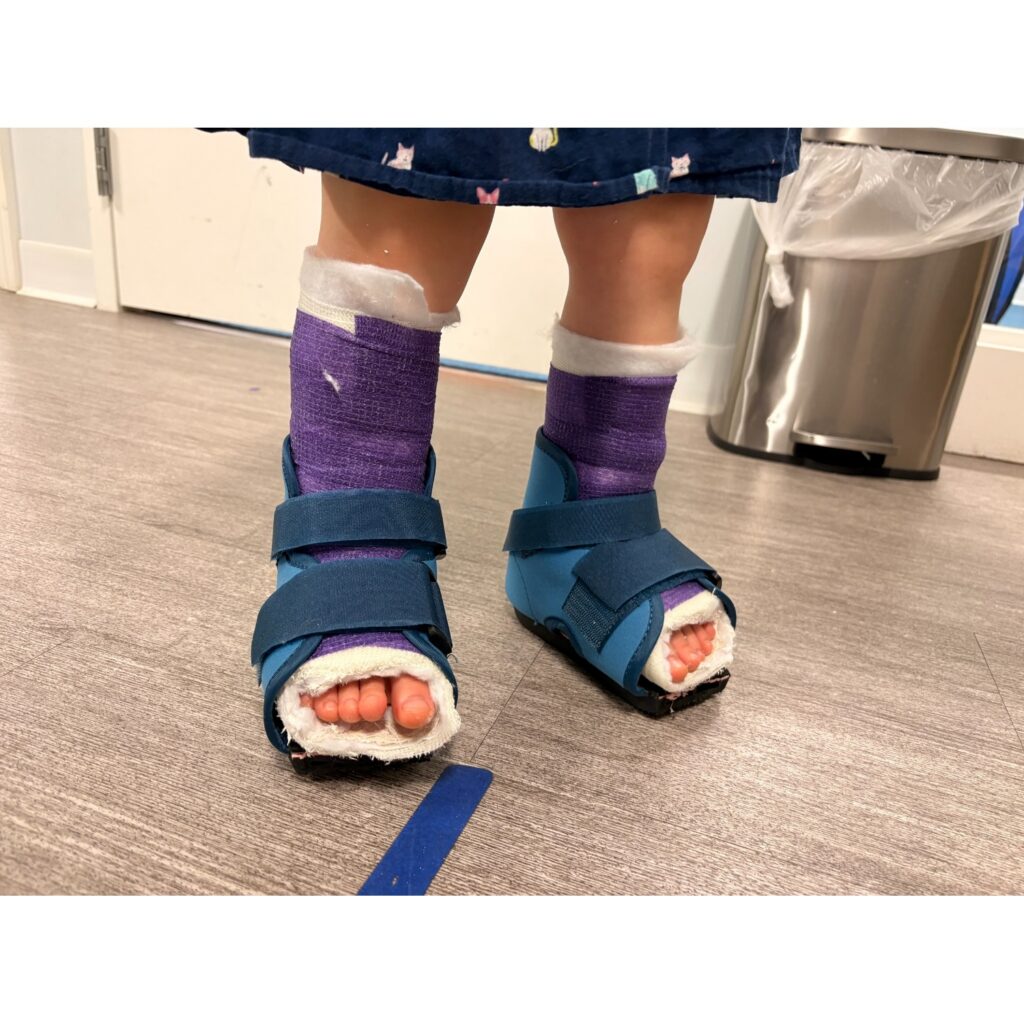
Serial casting is a therapeutic intervention used to gradually improve joint range of motion, muscle length, and positioning by applying a series of casts over a period of days or weeks. Each cast places the affected body part in a slightly improved position, allowing muscles, tendons, and surrounding soft tissues to slowly adapt to prolonged stretching over time.
Unlike a traditional cast used after an injury, serial casts are intentionally changed on a regular schedule—often every one to two weeks—to progressively improve alignment and mobility while minimizing discomfort and protecting tissue integrity.
In pediatric physical therapy, serial casting is commonly used for children who have limited range of motion, muscle tightness, abnormal movement patterns, or positioning differences that affect function. Depending on the child’s needs, casts may be applied to the foot, ankle, knee, or other joints.
The overall goal of serial casting is not simply to improve flexibility—it is to create meaningful changes in how a child moves and participates in daily activities. Improved range of motion and alignment can support skills such as standing, walking, climbing stairs, navigating playground equipment, and participating more comfortably in play and family routines. Throughout the process, therapists closely monitor skin integrity, circulation, comfort, and functional changes to ensure the intervention remains safe and effective. Families also play an important role by monitoring tolerance at home and communicating any concerns throughout treatment.
Why is Serial Casting Used?
Serial casting may be recommended when stretching, strengthening, orthotics, or other interventions alone are not creating enough change. The goal is to create more lasting improvements in positioning and movement while minimizing the need for more invasive interventions.
Children may benefit from serial casting if they have:
- Tight muscles or limited range of motion
- Abnormal foot positioning
- Toe walking
- Neurologic conditions impacting movement
- Orthopedic diagnoses affecting alignment and mobility
Every child is different, and determining whether serial casting is appropriate requires an individualized evaluation.
Who Performs Serial Casting?
Serial casting is performed by trained healthcare professionals, often physical therapists or other rehabilitation providers with specialized training. Treatment includes careful assessment, cast application and removal, monitoring skin integrity and comfort, family education, and progression of home activities throughout the process.
Family involvement is a major component of success, as caregivers help monitor tolerance, support daily routines, and encourage continued movement between appointments.
One Family’s Experience
One of our recent clients was a two-year-old child diagnosed with bilateral metatarsus adductus, a condition where both feet curved inward and impacted foot positioning. Her family had been told that surgery may be necessary to address her foot alignment. Looking for additional options, they pursued serial casting as a conservative intervention before moving forward with surgical management.
Throughout the serial casting process, she tolerated treatment well and demonstrated gradual improvements in foot positioning with each cast change. By the completion of her casting series, her foot alignment had significantly improved, resulting in meaningful changes in her overall positioning and movement.
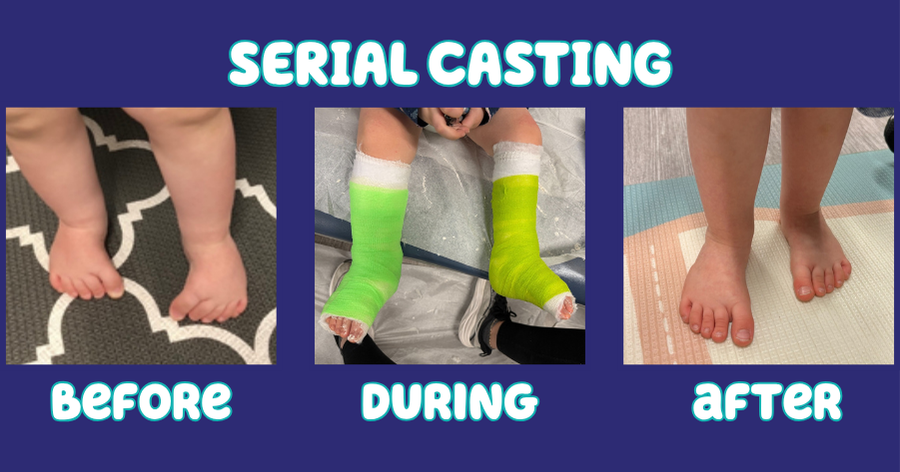
One of the biggest milestones for her family was that she no longer required specialized orthotic boots following treatment. Improvements in alignment allowed for more typical foot positioning during standing, walking, and play, helping support participation in age-appropriate activities.
Beyond the physical changes, the impact on her family was significant. What initially felt like an intimidating process became one filled with excitement and encouragement as they watched meaningful progress happen week after week. The family was thrilled with the outcome and grateful to have explored a non-surgical option that led to substantial improvements.
While every child responds differently to treatment, and serial casting is not appropriate for every diagnosis or situation, her experience highlights how conservative interventions can sometimes create meaningful changes in alignment, function, and participation for both children and their families.
Need More Support?
If you think your child may benefit from serial casting or if you have concerns about their movement, foot positioning, or gross motor development, the first step is scheduling an evaluation with a physical therapist. During the evaluation, therapists assess mobility, range of motion, alignment, strength, and functional skills to determine whether serial casting or other interventions may be appropriate.
Early intervention can often provide more opportunities to improve movement patterns and support participation in everyday activities.
If you have questions about whether serial casting may be right for your child, our team is happy to help guide you through the process.