
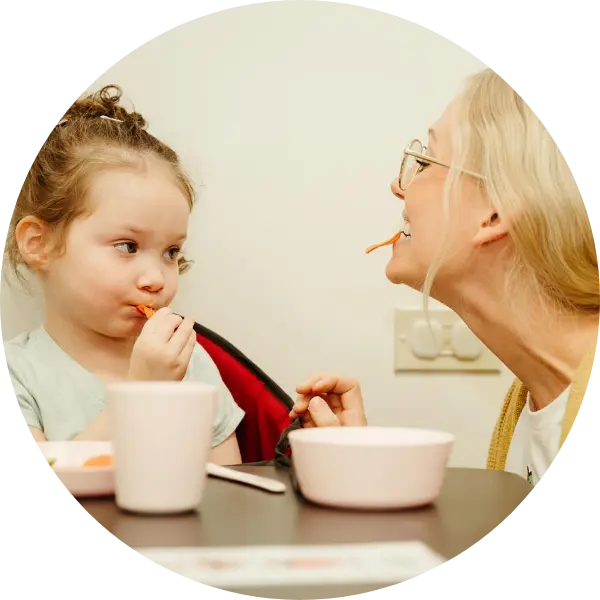
February Is About Connection. And for Little Ones, Communication and Feeding Are Where It Begins
A shared snack at the table. A toddler reaching up with hopeful eyes. A first word whispered during a bedtime routine. A meal that ends in laughter, or sometimes in tears.
For many families, these moments are joyful and natural. For others, though, they can feel heavy. Mealtimes may be stressful experiences when connection can’t be formed. These important moments of connection during mealtimes could be missed when language is slow to emerge. You may find yourself wondering whether your child is simply taking their time or if something more is going on.
At Playabilities, we see every day how close communication, feeding, and connection are woven together, especially in the first four years of life. Speech therapy at this age is not about pressure or performance, it is about helping children feel understood and helping families feel supported.
When Picky Eating is More Than a Phase
Picky eating is common in toddlers and preschoolers. Many children go through stages of wanting the same foods over and over or rejecting new ones. However, for some families, feeding feels harder than expected.
You may notice your child gagging or refusing foods with certain textures. Meals might involve crying, throwing food, or complete shutdown. Your child may rely on a very small list of safe foods, and attempts to introduce new foods feel overwhelming for everyone at the table.
What many parents do not realize is that feeding challenges are closely connected to communication and oral motor development. Eating is not just about nutrition. It requires coordination of the lips, tongue, jaw, and breath. It also involves sensory processing, emotional regulation, and the ability to communicate preferences and discomfort.
Speech-language pathologists are trained to support feeding and swallowing development in young children. At Playabilities, our speech therapists look at the whole child. We consider how your child processes sensory input, how their oral muscles work together, and how they communicate during meals.
A key part of feeding therapy is connection. One of the most important strategies we share with families is to create positive experiences at the table without focusing on bites. Sitting together, talking about food colors or smells, and allowing exploration without expectation builds trust. When children feel safe and not pressured, communication and curiosity grow.
For some children, feeding difficulties are also related to how the muscles of the mouth work together. Chewing, moving food safely, and swallowing require strength, coordination, and endurance of the lips, tongue, jaw, and cheeks. A child may avoid certain textures not because they dislike them, but because chewing is tiring, uncomfortable, or inefficient. Others may pocket food in their cheeks, cough or gag during meals, or prefer soft foods because they are easier to manage. In these cases, speech therapy may focus on building oral-motor skills and safe swallowing patterns to make eating feel more successful and less effortful.
Early Communication Is About Being Understood, Not Just Talking
Speech therapy is often associated with talking, but communication in the early years is much broader than spoken words. Communication includes gestures, sounds, eye contact, understanding language, following directions, and using words meaningfully during daily routines.
Some toddlers have a growing vocabulary but struggle to combine words. Others understand far more than they can express. Some children avoid talking because it feels frustrating or hard. Others talk often but are difficult to understand.
Parents frequently wonder what is typical and what deserves support. You may hear reassurance from others to “wait and see,” while your instincts tell you something feels off. When concerns linger, early support can make a meaningful difference. Trusting your instincts and seeking guidance sooner rather than later helps children build confidence and skills during a critical window of development.
Speech therapy for young children focuses on building strong foundations. Therapy sessions are play based and relationship driven. Through play, songs, books, and everyday routines, children learn how to communicate in ways that feel natural and motivating.
Speech therapy is not just for the child. Parents and caregivers are an essential part of the process. Therapy focuses on coaching families with strategies that fit naturally into everyday routines, so progress continues long after the session ends. One strategy speech language pathologists often coach families on is slowing down and following a child’s lead. When you notice what your child is interested in and talk about that, you reduce pressure and increase connection. If your child is stacking crackers, you talk about the crackers. If they are flipping pages quickly in a book, you comment on what they see. Language grows best when children feel seen.
Another powerful strategy is narrating with warmth rather than asking constant questions. Instead of “What color is this?” try “That apple is red and shiny.” This models language without putting children on the spot and is especially helpful for children who are late talkers or easily frustrated. Communication grows through connection. When children feel understood, supported, and free from pressure, their skills can flourish. Speech therapy helps create those moments by meeting children where they are and supporting families as partners in the process.
Why Early Support Makes a Difference

The toddler and preschool years are a critical window for communication and feeding development. When children struggle to express themselves or feel overwhelmed during meals, frustration often shows up as tantrums, avoidance, or withdrawal.
Early speech therapy helps children develop skills before frustration becomes a pattern. It also gives parents tools they can use immediately at home. At Playabilities, we believe parents are the most important part of a child’s progress.
We work closely with families to integrate strategies into real life. That might look like modeling simple language during play, using predictable phrases during routines, or adjusting how food is presented at meals. Shared routines such as bath time, bedtime, or getting ready to go outside are powerful communication anchors. Repeating the same words, songs, or playful phrases during these moments helps children anticipate, participate, and communicate more confidently.
Another important focus is to respond enthusiastically to all communication attempts. Words are only one form of communication. Gestures, sounds, signs, facial expressions, and eye contact all count. When you respond with warmth and excitement, you are teaching your child that communication works and that they are understood.
A Relationship Driven Approach to Speech Therapy
At Playabilities, we believe children learn best through connection. Therapy sessions are built on trust, joy, and genuine relationships. Children are not expected to perform or produce on demand. They are invited to explore, communicate, and grow at their own pace.
For a child with feeding challenges, therapy may involve sensory play and food exploration without pressure to eat. For a child with language delays, therapy may focus on shared attention, turn taking, and joyful interaction. Progress does not always happen in a straight line, and that is okay.
We celebrate small moments because they matter. Trying a new texture. Using a new sound. Pointing to request help. These moments build the foundation for long term communication, feeding confidence, and emotional security.
If You Are Wondering Whether Speech Therapy Is Right for Your Child
Many families come to Playabilities with questions rather than certainty.
Is this normal? Am I overreacting? Should I wait longer?
Those questions are valid. You do not need a diagnosis to seek support. A speech and feeding evaluation can provide clarity, reassurance, and a plan that fits your child and family. Receiving an evaluation, diagnosis, or treatment plan does not mean something is “wrong.” It simply offers understanding and a clear path forward.
Speech therapy may be helpful if your child:
- Uses fewer words than expected or is slow to start talking
- Understands more than they can express
- Becomes frustrated when trying to communicate
- Is difficult for others outside of your immediate family to understand
- Has trouble combining words or following directions
- Experiences feeding challenges related to textures, chewing, or mealtime stress
February reminds us that connection is at the heart of everything. Helping your child communicate, feel confident at meals, and experience being understood is one of the most meaningful ways to nurture that connection.
At Playabilities, we partner with families to support children with warmth, expertise, and joy. Communication is not just about words or eating. It is about helping children feel safe, capable, and deeply connected in their world.